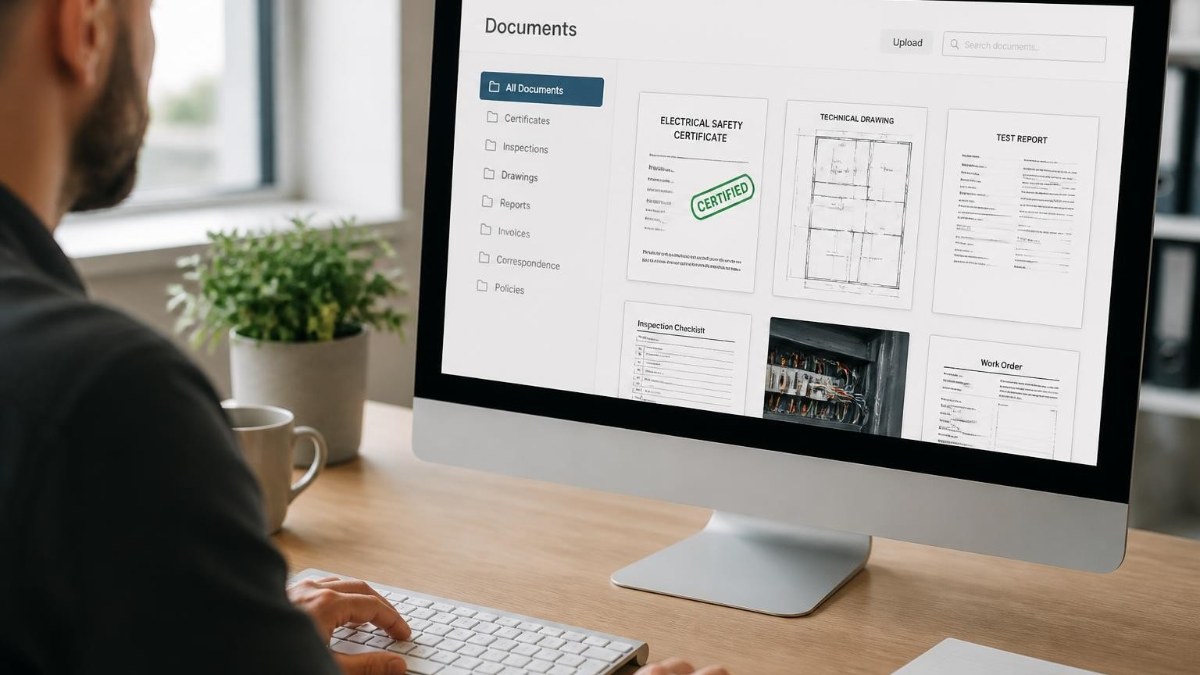
Managing all documents within an electrical contracting business has evolved from filing cabinets and paper trails to sophisticated digital ecosystems. For electricians and contractors working with Certificates of Compliance and technical documentation, understanding how to effectively organize, store, and access all documents is no longer optional-it's essential for maintaining compliance, winning contracts, and operating efficiently. The shift towards digital platforms has transformed how professionals handle everything from initial quotations to final compliance certificates, creating opportunities for those who embrace systematic document management whilst presenting challenges for those who resist change.
Understanding the Scope of All Documents
When we refer to all documents in an electrical contracting context, we're addressing a surprisingly broad category. The legal definition of "all documents" extends beyond simple paper records to encompass electronic files, photographs, videos, audio recordings, and any medium containing information.
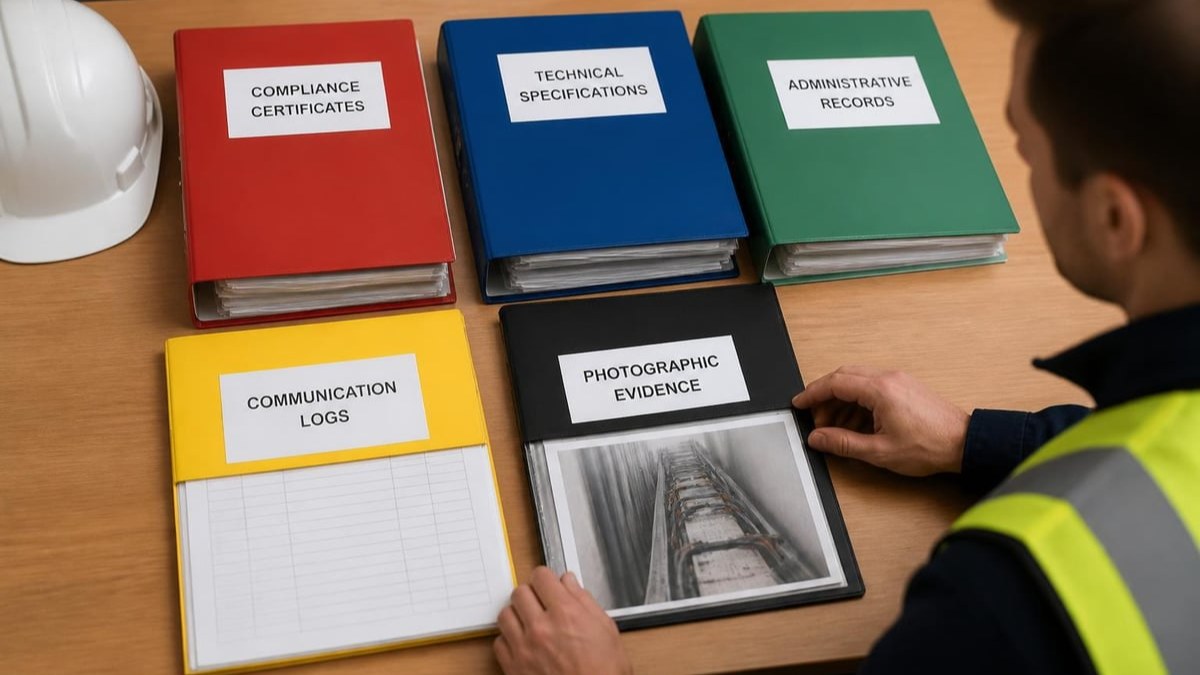
For electricians, this includes:
- Compliance documentation: Certificates of Compliance (CoCs), test certificates, inspection reports
- Technical specifications: Circuit diagrams, installation manuals, equipment datasheets
- Administrative records: Invoices, quotations, contracts, insurance documents
- Communication logs: Email correspondence, site notes, client instructions
- Photographic evidence: Before and after installation images, defect documentation
Legal and Regulatory Requirements
The legal significance of documents cannot be overstated, particularly in industries governed by strict compliance standards. In South Africa, SANS 10142-1 regulations mandate that electricians maintain accurate records of all electrical installations and issue compliant Certificates of Compliance.
These requirements create specific obligations for managing all documents related to electrical work. Retention periods vary by document type, with some compliance certificates requiring storage for up to five years or longer. Failure to produce required documentation during audits or legal proceedings can result in substantial penalties, licence suspensions, or legal liability.
Digital Transformation of Document Management
The transition from physical to digital document management represents one of the most significant operational shifts in the electrical industry over the past decade. Traditional methods of storing all documents in filing cabinets and binders created numerous pain points: limited accessibility, risk of loss or damage, difficulty in retrieval, and substantial physical storage costs.
Benefits of Digital Systems
Digital platforms eliminate these constraints whilst introducing new capabilities that were impossible with paper-based systems. Real-time access to all documents from any location enables electricians to verify previous installations, retrieve specifications, or provide proof of compliance whilst on-site with clients.
Key advantages include:
- Instant searchability across thousands of documents
- Automated backup and disaster recovery
- Version control and edit tracking
- Simultaneous access by multiple team members
- Integration with mobile devices for field access
Cloud-based storage has become the standard for managing all documents in 2026, with electricians increasingly adopting platforms that sync seamlessly between mobile applications and desktop interfaces. This synchronization ensures that updates made in the field immediately reflect across all devices, eliminating the delays and errors associated with manual file transfers.
Organizing All Documents Effectively
Establishing a coherent organizational structure for all documents is fundamental to operational efficiency. Without clear systems, even digital storage becomes chaotic, with files scattered across folders, duplicates proliferating, and critical documents becoming effectively lost despite being technically accessible.
File Naming Conventions
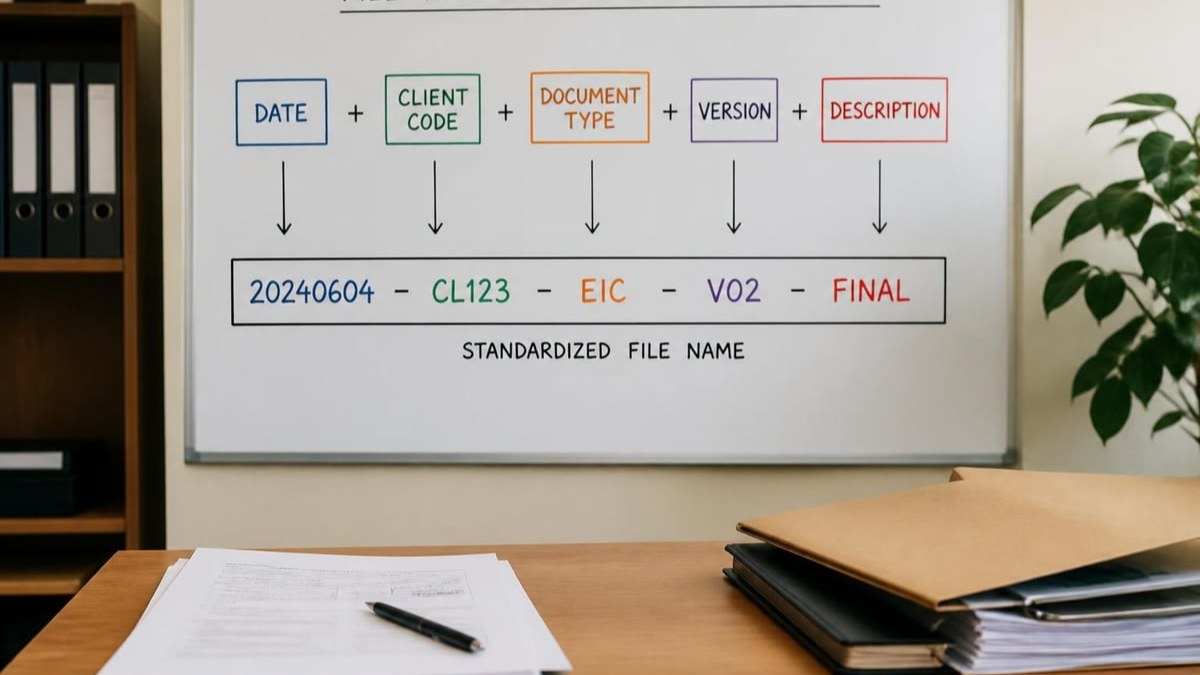
Implementing consistent naming conventions transforms how quickly team members can locate specific documents. A structured approach might include:
- Date prefix (YYYY-MM-DD format for chronological sorting)
- Client identifier (unique code or abbreviated name)
- Document type (CoC, Quote, Invoice, etc.)
- Version number (if applicable)
- Brief descriptor
Example: 2026-07-13_ClientABC_CoC_v2_MainDistributionBoard.pdf
Categorization Strategies
Beyond naming, implementing a hierarchical folder structure helps segregate all documents into logical groupings. Many electrical contractors find success with the following primary categories:
| Category | Subcategories | Retention Period |
|---|---|---|
| Compliance | CoCs, Test Certificates, Inspection Reports | 5+ years |
| Projects | Active Jobs, Completed Jobs, Quotes | 3-7 years |
| Administrative | Invoices, Receipts, Contracts | 7 years (tax) |
| Technical | Manuals, Specifications, Drawings | Indefinite |
| Client Records | Correspondence, Site Photos, Instructions | Duration of relationship |
This structure ensures that all documents flow into predetermined locations, reducing time spent on filing decisions and improving retrieval speed. The diverse types of documents that businesses manage make such systematic categorization essential.
Security and Access Control
Protecting all documents from unauthorized access, tampering, or loss must be a priority for electrical contractors handling sensitive compliance information. Biometric authentication, encryption, and role-based access controls have become standard features in professional document management platforms.
Multi-Layered Security Approaches
Comprehensive security for all documents requires multiple defensive layers:
- Encryption at rest and in transit protects documents from interception
- Biometric authentication ensures only authorized users access sensitive files
- Audit trails record every view, edit, or download of critical documents
- Automatic backup prevents data loss from hardware failures or cyberattacks
- Geographic redundancy stores copies across multiple data centres
For electricians working in the field, biometric signatures have revolutionized how compliance documents are authenticated. Unlike traditional written signatures that can be forged or disputed, biometric signatures provide verifiable proof of who signed a document and when, adding legal weight to all documents requiring authorization.
Compliance with Data Protection Laws
Managing all documents also means adhering to data protection regulations such as the Protection of Personal Information Act (POPIA) in South Africa. Client information contained within electrical contracts, invoices, and correspondence constitutes personal data subject to strict handling requirements.
Electricians must ensure that systems storing all documents implement appropriate safeguards, obtain necessary consents, and provide clients with rights to access or delete their personal information. Platforms designed specifically for electrical compliance typically build these protections into their architecture, reducing the compliance burden on individual contractors.
Streamlining Document Workflows
Efficiency in handling all documents stems not just from where they're stored, but how they move through your business processes. Streamlined workflows reduce time spent on administrative tasks, minimize errors, and accelerate project completion.
Automation Opportunities
Modern document management platforms automate numerous tasks that previously consumed significant time:
- Template-based generation: Create standard documents pre-filled with recurring information
- Automatic PDF conversion: Transform source documents into universally accessible formats
- Batch processing: Apply signatures, watermarks, or metadata to multiple documents simultaneously
- Scheduled reports: Generate and distribute document summaries automatically
- Integration triggers: Automatically save email attachments or form submissions to designated folders
For electricians managing Certificates of Compliance, these automations prove particularly valuable. The Energy Warehouse platform enables professionals to create and manage digital CoCs up to 60% faster than manual methods through features such as built-in compliance checks, voice-to-text data capture, and automated PDF generation.
Collaborative Access to All Documents
Team collaboration on documents has evolved beyond simple file sharing. Modern platforms enable electricians to leave comments directly on specific documents, tag team members for review, and maintain conversation threads attached to individual files. This contextual collaboration ensures that discussions about all documents remain organized and accessible, rather than scattered across email inboxes or messaging applications.
Search and Retrieval Systems
The ability to quickly locate specific items within all documents directly impacts productivity. A well-implemented search system can reduce document retrieval time from minutes to seconds, whilst poor search functionality renders even the most organized filing system frustrating to use.
Advanced Search Capabilities
Effective search encompasses multiple dimensions:
- Full-text search scans document contents, not just filenames
- Metadata filtering narrows results by date, client, document type, or custom tags
- Optical Character Recognition (OCR) makes scanned paper documents searchable
- Boolean operators enable complex queries combining multiple criteria
- Saved searches preserve frequently used search parameters for one-click access
Research on identifying documents within large collections demonstrates the technical challenges and solutions for managing extensive digital archives. As electrical contractors accumulate years of compliance documentation, implementing robust search functionality becomes increasingly critical.
Mobile Access to All Documents
Field work demands mobile access to all documents. Electricians arriving at job sites frequently need to reference previous installations, verify specifications, or review client instructions without returning to the office.
Offline Functionality
Reliable mobile document management requires offline capability. Network coverage remains inconsistent in many areas, and electricians cannot afford to lose access to critical information due to connectivity issues.
| Feature | Online Mode | Offline Mode |
|---|---|---|
| View documents | Full access | Cached documents only |
| Edit documents | Immediate sync | Local save, sync on reconnection |
| Create new documents | Immediate upload | Queue for upload |
| Search | Full archive | Downloaded documents only |
| Share documents | Instant transmission | Queued for sending |
The most effective platforms pre-cache frequently accessed documents and intelligently sync changes when connectivity returns, ensuring that all documents remain accessible regardless of network conditions.
Integration with Existing Systems
All documents rarely exist in isolation. They connect to broader business systems including accounting software, customer relationship management (CRM) platforms, and project management tools. Integration between these systems eliminates duplicate data entry and ensures consistency across all documents.
Common Integration Points
Electricians benefit particularly from integrations that:
- Import client data from CRM systems into compliance documents
- Export invoice details to accounting software automatically
- Link project milestones to document generation triggers
- Synchronize contact information across all platforms
- Consolidate reporting by pulling data from multiple document sources
The Energy Warehouse platform demonstrates this integration philosophy by synchronizing document access between mobile applications and web interfaces, ensuring that changes made in the field immediately reflect across all access points.
Disaster Recovery and Business Continuity
Protecting all documents against catastrophic loss represents a critical responsibility. Natural disasters, cyberattacks, hardware failures, or simple human error can destroy years of accumulated documentation if adequate safeguards aren't implemented.
Backup Strategies
Comprehensive protection requires multiple backup approaches:
- Automated daily backups capture all changes without manual intervention
- Versioning systems preserve previous document states for rollback capability
- Geographic distribution stores copies in multiple physical locations
- Regular restoration testing verifies that backups are actually recoverable
- Immutable backup copies protect against ransomware encryption attacks
Studies examining document coverage and accessibility highlight the importance of ensuring critical documents remain available over time. For compliance documents with multi-year retention requirements, this long-term accessibility becomes particularly crucial.
Training and Adoption
Technology only delivers value when people use it effectively. Introducing new systems for managing all documents requires thoughtful change management and comprehensive training to ensure team-wide adoption.
Implementation Best Practices
Successful transitions follow structured approaches:
- Pilot programmes with small teams identify issues before full deployment
- Champion identification designates enthusiastic early adopters as peer trainers
- Phased rollout prevents overwhelming staff with too many changes simultaneously
- Documentation and resources provide reference materials for self-service learning
- Regular feedback sessions surface concerns and improvement opportunities
The shift from paper-based to digital documentation represents a significant cultural change for many electrical contractors. Acknowledging this transition's magnitude and providing adequate support determines whether teams embrace or resist new document management approaches.
Measuring Document Management Success
Evaluating the effectiveness of systems managing all documents requires defining relevant metrics. Without measurement, it's impossible to determine whether processes are improving or identify areas needing attention.
Key Performance Indicators
Relevant metrics for document management include:
| Metric | Target | Measurement Method |
|---|---|---|
| Document retrieval time | < 30 seconds | Timed user tests |
| Storage costs per document | Decreasing annually | Financial analysis |
| Duplicate document rate | < 5% | Automated duplicate detection |
| Backup success rate | 100% | System logs |
| User adoption rate | > 90% | Login frequency tracking |
| Compliance audit pass rate | 100% | Audit results |
Regular review of these indicators reveals trends and highlights both successes and areas requiring improvement. The legal and regulatory framework surrounding document management provides additional metrics around compliance with retention and accessibility requirements.
Future Trends in Document Management
The evolution of systems managing all documents continues to accelerate. Emerging technologies promise further improvements in how electrical contractors handle their documentation requirements.
Artificial Intelligence and Automation
AI-powered document analysis will increasingly automate tasks that currently require human judgment:
- Automatic categorization sorts incoming documents without manual filing
- Intelligent extraction pulls data from unstructured documents into databases
- Predictive retrieval suggests relevant documents based on current context
- Anomaly detection identifies unusual patterns suggesting errors or fraud
- Natural language search understands conversational queries rather than requiring exact keywords
These capabilities will transform all documents from passive storage items into active assets that proactively support business decisions.
Blockchain for Document Verification
Blockchain technology offers tamper-proof verification for critical compliance documents. By recording document hashes on distributed ledgers, electricians can provide cryptographic proof that Certificates of Compliance haven't been altered since issuance, adding another layer of legal protection to all documents requiring authentication.
Effective management of all documents forms the foundation of successful electrical contracting operations in 2026. From compliance requirements to operational efficiency, the systems you implement for organizing, securing, and accessing your documentation directly impact your business performance and legal standing. Energy Warehouse provides electricians with a comprehensive digital platform specifically designed to streamline the management of Certificates of Compliance and related documentation, featuring cloud storage, biometric security, offline capability, and team collaboration tools that transform how you handle all documents throughout your projects.