
The landscape of regulatory compliance has undergone a fundamental transformation over the past decade. Where businesses once relied on paper trails, filing cabinets, and manual verification processes, the digitalcompliance revolution has introduced sophisticated platforms that automate, streamline, and enhance every aspect of regulatory adherence. For industries requiring strict documentation standards, such as electrical contractors managing SANS 10142-1 compliance, this shift represents not merely a technological upgrade but a complete reimagining of how professionals approach their regulatory obligations.
Understanding Digital Compliance in 2026
Digitalcompliance refers to the use of technology-driven systems to ensure organizations meet regulatory requirements, maintain accurate records, and demonstrate adherence to industry standards. Unlike traditional compliance methods that relied heavily on manual processes, digitalcompliance integrates automated workflows, cloud storage, real-time verification, and secure authentication mechanisms.
The benefits extend far beyond simple digitization of paper forms. Modern digitalcompliance systems incorporate intelligent validation, ensuring that required fields are completed, calculations are accurate, and regulatory standards are met before documents are finalized. This proactive approach prevents errors at the point of entry rather than discovering them during audits or inspections.
The Core Components of Effective Digital Compliance
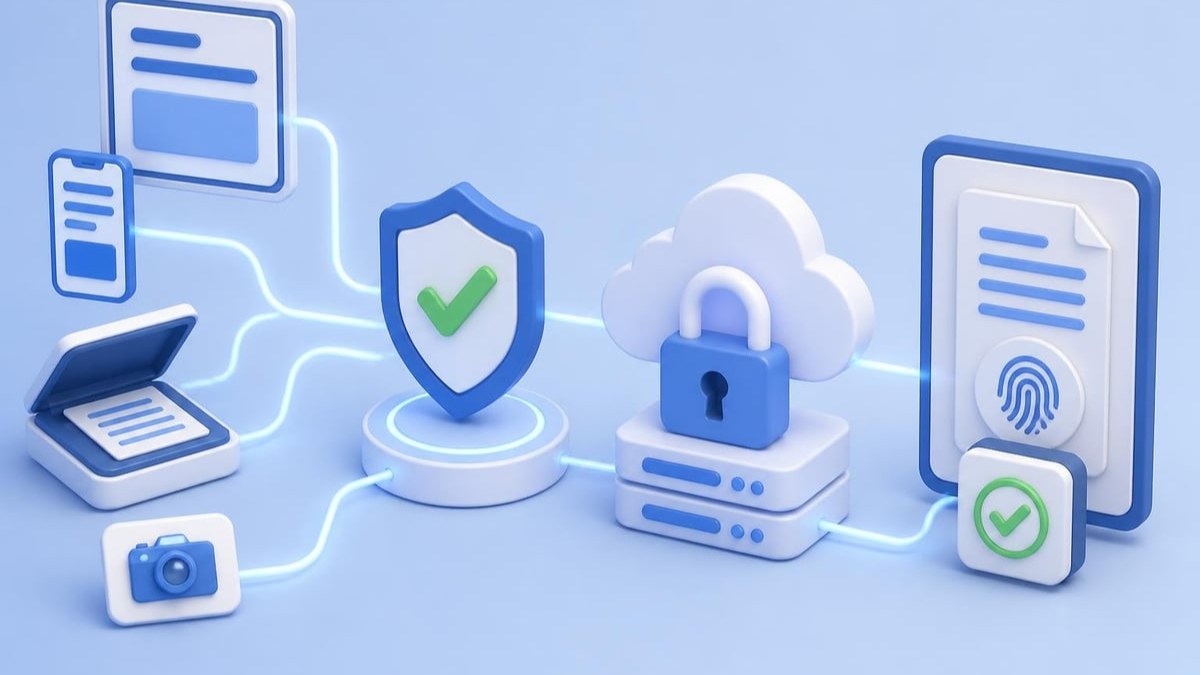
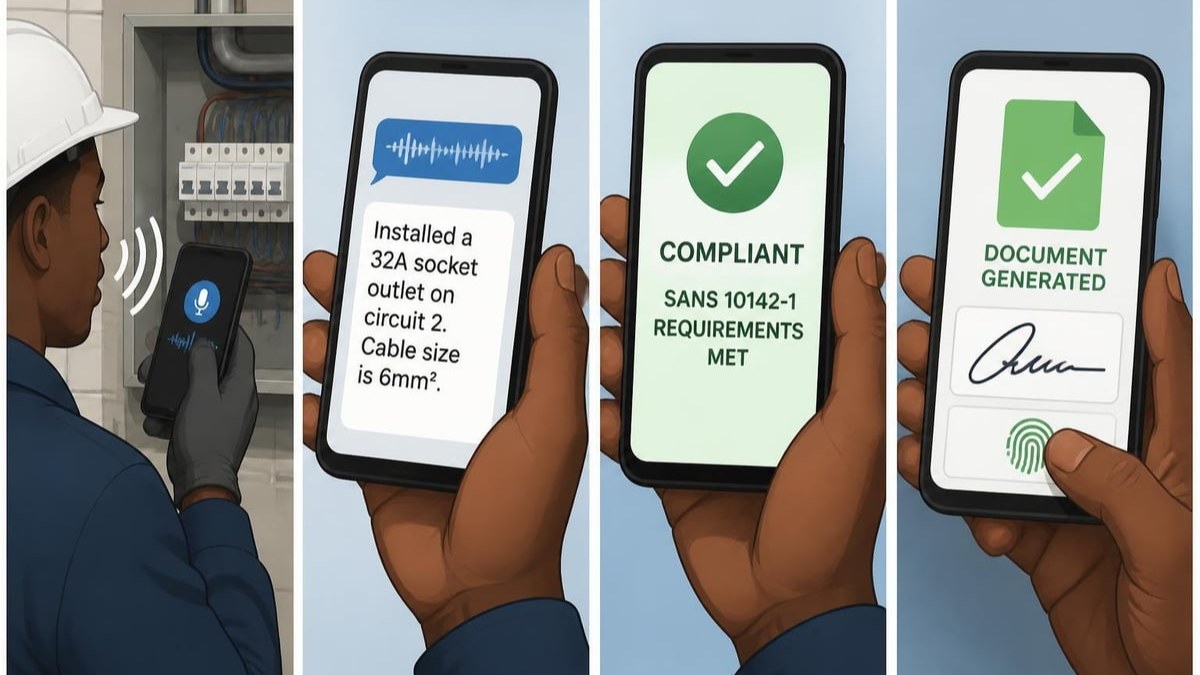
Any robust digitalcompliance framework requires several foundational elements working in harmony. Data capture forms the first layer, enabling users to input information through multiple channels including voice-to-text, manual entry, and automated field population. Validation engines then verify this data against regulatory requirements, flagging inconsistencies or missing information immediately.
Secure storage represents another critical component, with digital archiving best practices ensuring that compliance documents remain accessible, tamper-proof, and retrievable for the required retention periods. Cloud-based systems offer particular advantages here, providing redundancy, disaster recovery, and accessibility from any location.
Authentication mechanisms complete the picture, with biometric signatures and multi-factor authentication ensuring that only authorized individuals can approve or modify compliance documents. These security measures satisfy both regulatory requirements and practical business needs for accountability and traceability.
Why Digital Compliance Matters for Electrical Professionals
For electricians and electrical contractors, digitalcompliance addresses specific pain points that have plagued the industry for years. The creation of Certificates of Compliance (CoCs) traditionally involved handwritten forms, manual calculations, and physical signatures collected across multiple parties. This process was not only time-consuming but also prone to errors, omissions, and legibility issues.
The shift to digitalcompliance platforms has transformed this workflow dramatically. Electricians can now complete CoCs on mobile devices whilst on-site, with built-in compliance checks ensuring that every required field is addressed and every calculation follows the correct formula. The reduction in completion time can be substantial, with some professionals reporting efficiency gains of up to 60%.
| Traditional Compliance | Digital Compliance |
|---|---|
| Paper forms prone to damage | Cloud-based storage with automatic backups |
| Manual calculations | Automated computation with error checking |
| Physical signature collection | Digital signatures with biometric security |
| Filing cabinet storage | Searchable digital archives |
| Limited team collaboration | Real-time sharing and comments |
Regulatory Frameworks Driving Digital Adoption
The push towards digitalcompliance is not merely a matter of convenience. Regulatory bodies worldwide are increasingly recognizing digital signatures and electronic records as legally binding, provided they meet specific security and authentication standards. Understanding data compliance regulations helps organizations navigate this evolving landscape.
In South Africa, the acceptance of digital Certificates of Compliance under SANS 10142-1 has accelerated the adoption of digitalcompliance platforms within the electrical industry. These systems must demonstrate that digital signatures carry the same legal weight as handwritten ones, requiring robust authentication methods and audit trails that prove document integrity.
The Protection of Personal Information Act (POPIA) adds another layer of requirements for digitalcompliance systems handling personal data. Platforms must ensure that client information, contact details, and other personal data are stored securely, accessed only by authorized users, and retained for appropriate periods before secure deletion.
Implementing Digital Compliance Systems
Transitioning from paper-based processes to digitalcompliance requires careful planning and execution. Organizations must evaluate their current workflows, identify bottlenecks and error-prone steps, and select systems that address these specific challenges whilst meeting regulatory requirements.
Assessment and Planning Phase
Begin by documenting your existing compliance processes in detail. Map every step from initial job acceptance through final document delivery, noting where delays occur, where errors typically arise, and where manual work consumes excessive time. This baseline assessment provides the foundation for measuring improvement after digitalcompliance implementation.
Stakeholder engagement proves equally critical. Involve team members who will use the system daily, gathering their insights on pain points and must-have features. Their buy-in will significantly affect adoption rates and ultimate success.
Consider these key evaluation criteria when selecting a digitalcompliance platform:
- Offline capability for sites without reliable internet connectivity
- Mobile optimization for field use on smartphones and tablets
- Integration with existing business systems and workflows
- Compliance with relevant data protection and privacy regulations
- Scalability to accommodate business growth
- Training resources and ongoing support availability
Technical Implementation Considerations
The technical foundation of any digitalcompliance system determines its reliability, security, and user experience. Cloud-based architectures offer distinct advantages over on-premises solutions, particularly for businesses with distributed teams or mobile workforces.
Synchronization mechanisms ensure that data entered offline is automatically uploaded when connectivity is restored, preventing data loss and maintaining a single source of truth. This functionality is particularly valuable for electricians working in areas with limited network coverage.
Access controls must be granular enough to support different user roles whilst simple enough to manage efficiently. For instance, apprentices might need the ability to capture site information but not approve final certificates, whilst senior electricians require full authorization rights.
Security and Authentication in Digital Compliance
Security forms the cornerstone of credible digitalcompliance systems. Without robust protections, digital documents lack the legal standing and trustworthiness necessary for regulatory acceptance. Cybersecurity regulations and compliance frameworks provide guidance on establishing appropriate security measures.
Biometric Authentication Technologies
Traditional username and password combinations offer limited security in compliance contexts. Biometric authentication provides significantly stronger verification, linking document approval directly to specific individuals in a way that is difficult to forge or repudiate. Modern biometric signatures capture unique physical characteristics, creating an audit trail that satisfies both regulatory requirements and legal scrutiny.
Fingerprint recognition has become the most common biometric method due to its balance of security, convenience, and cost. When an electrician signs a CoC using fingerprint authentication, the system captures not just an image but multiple data points that uniquely identify that individual.
Multi-factor authentication adds additional security layers by requiring two or more verification methods. A typical implementation might combine something the user knows (password), something they have (mobile device), and something they are (fingerprint), making unauthorized access exponentially more difficult.
Collaboration and Communication in Digital Compliance
Modern digitalcompliance extends beyond individual document creation to encompass team-based workflows and client communication. For electrical businesses managing multiple projects simultaneously, effective collaboration tools can significantly impact productivity and quality.
The ability to share information, images, and updates within a secure digitalcompliance platform eliminates the fragmented communication that occurs when teams rely on multiple disconnected tools. Rather than juggling separate apps for messaging, photo sharing, and document management, electrical team management software consolidates these functions.
Team Workflows and Document Collaboration
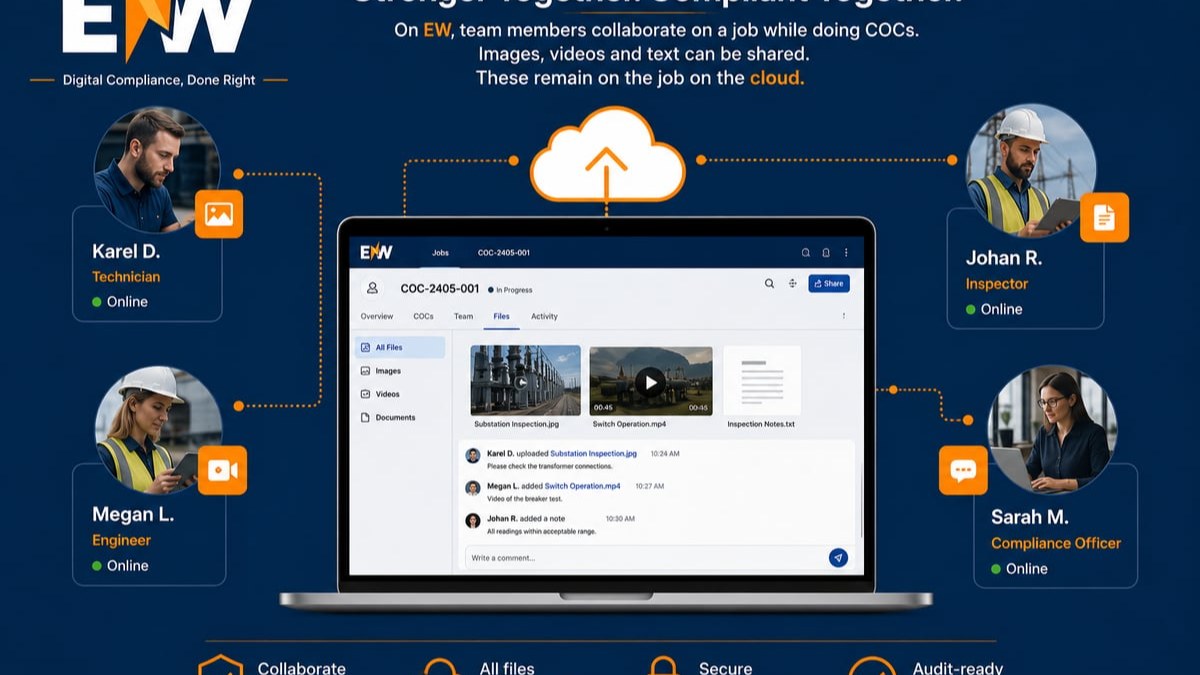
Comment threads attached directly to compliance jobs enable asynchronous communication that maintains context. When a supervisor reviews a draft CoC and identifies a correction needed, they can leave a comment on that specific section rather than sending a separate message that might be overlooked or misinterpreted.
Media sharing capabilities allow team members to attach photos of installations, videos of testing procedures, or images of nameplate data directly to the relevant job record. This visual documentation serves multiple purposes: it supports the compliance record, provides evidence if questions arise later, and facilitates quality control reviews.
Energy Warehouse streamlines this collaboration by providing a unified platform where electricians can create SANS 10142-1 compliant Certificates of Compliance whilst simultaneously communicating with team members, sharing site photos, and maintaining all project documentation in a single, secure cloud location. This integrated approach eliminates the need for separate communication channels and ensures that all job-related information remains accessible and organized.
Client Communication and Document Delivery
Once compliance documents are completed and approved, digitalcompliance systems facilitate efficient delivery to clients through multiple channels. Direct sharing to WhatsApp, email, or cloud storage links provides flexibility to match client preferences whilst maintaining security through password protection or time-limited access.
Automated notifications keep clients informed of progress without requiring manual follow-up. When a CoC is completed, the system can automatically send the document to the client along with any relevant supporting materials, creating a professional impression and reducing administrative overhead.
Data Management and Retention in Digital Compliance
Proper data management separates effective digitalcompliance systems from mere digitization efforts. Regulatory requirements typically mandate specific retention periods for compliance documents, and organizations must be able to retrieve historical records quickly when needed for audits, disputes, or reference purposes.
Searchability and Retrieval
Metadata tagging transforms digitalcompliance archives from simple document repositories into powerful information systems. When each CoC is tagged with relevant data points such as client name, property address, installation type, and completion date, users can locate specific documents in seconds rather than manually reviewing hundreds of files.
Advanced search functions should support multiple criteria simultaneously, enabling queries like "all CoCs completed for Client X at properties in suburb Y during Q2 2026." This capability proves invaluable during audits or when clients request copies of historical documentation.
| Search Capability | Business Value |
|---|---|
| Full-text search | Find documents containing specific terms or descriptions |
| Date range filtering | Retrieve records from specific periods |
| Client-based queries | Access all documentation for particular customers |
| Status filtering | Identify pending, completed, or revised documents |
| Multi-criteria search | Combine parameters for precise results |
Compliance Reporting and Analytics
Beyond individual document management, digitalcompliance platforms can aggregate data to provide insights into business performance, compliance trends, and team productivity. Dashboard visualizations present key metrics at a glance, highlighting workload distribution, completion rates, and potential compliance issues requiring attention.
Automated reporting generates summaries of compliance activities over specified periods, supporting both internal management reviews and external regulatory submissions. Rather than manually compiling this information from disparate sources, managers can export comprehensive reports with a few clicks.
Integration with Broader Business Systems
Digitalcompliance systems deliver maximum value when integrated with other business tools rather than operating as isolated solutions. For electrical contractors, this might include connections to accounting software for invoicing, scheduling systems for job management, or customer relationship management platforms.
API Connectivity and Data Exchange
Application programming interfaces (APIs) enable different software systems to communicate and share data automatically. When a CoC is marked as complete in a digitalcompliance platform, an API integration could trigger invoice generation in accounting software, update job status in project management tools, and notify the client through a CRM system.
Standard data formats ensure compatibility across different platforms. Exporting compliance data in widely-supported formats like PDF, CSV, or JSON enables sharing with stakeholders who may not use the same digitalcompliance system.
The adoption of cloud-based compliance software facilitates these integrations by providing consistent availability and standardized interfaces that other systems can reliably access.
Training and Change Management for Digital Compliance
Technology implementation succeeds or fails based largely on user adoption. Even the most sophisticated digitalcompliance system delivers little value if team members continue using familiar paper-based processes due to inadequate training or resistance to change.
Onboarding Strategies
Phased rollouts reduce the overwhelming feeling that can accompany major process changes. Rather than switching everything at once, organizations might begin with new projects whilst continuing paper processes for ongoing work, gradually expanding digitalcompliance usage as comfort levels increase.
Role-based training recognizes that different team members interact with digitalcompliance systems in different ways. An apprentice capturing site data needs different instruction than an office administrator generating client reports or a business owner reviewing compliance analytics.
Effective training programmes include:
- Hands-on practice with sample data before working with live projects
- Quick reference guides for common tasks accessible on mobile devices
- Video tutorials demonstrating specific features and workflows
- Regular refresher sessions as new features are added or processes evolve
- Peer mentoring pairing experienced users with those newer to the system
Measuring Adoption and Success
Usage metrics reveal how thoroughly digitalcompliance has been integrated into daily operations. Tracking the percentage of CoCs created digitally versus on paper, time from job completion to document delivery, and error rates in submitted compliance documents provides objective measures of adoption success.
User feedback gathered through surveys or informal check-ins identifies ongoing pain points and opportunities for process refinement. Questions might address ease of use, time savings achieved, confidence in document accuracy, and suggestions for improvement.
Future Trends in Digital Compliance
The digitalcompliance landscape continues evolving as new technologies mature and regulatory frameworks adapt. Understanding emerging trends helps organizations make strategic decisions about platform selection and process development.
Artificial Intelligence and Automation
AI is reshaping compliance through intelligent automation of routine tasks, predictive analytics identifying potential compliance risks, and natural language processing extracting relevant information from unstructured documents. For electricians, this might mean systems that automatically populate test result fields based on photos of testing equipment displays or voice descriptions of installation characteristics.
Machine learning enables digitalcompliance platforms to improve over time, recognizing patterns in user behaviour and suggesting optimal workflows. A system might learn that certain installation types typically require specific supplementary documentation and proactively prompt users to capture those materials.
Enhanced Accessibility and Inclusion
Digital accessibility requirements are expanding as regulators recognize that compliance systems must be usable by individuals with diverse abilities. This includes support for screen readers, keyboard-only navigation, voice control, and customizable display options for users with visual impairments.
Multilingual support makes digitalcompliance accessible to diverse teams, with interfaces and instructions available in multiple languages. This is particularly relevant in industries like electrical contracting where workforces may include speakers of various languages.
Blockchain and Immutable Records
Distributed ledger technology offers the potential for compliance records that are mathematically verifiable as unaltered since creation. When a CoC is written to a blockchain, any subsequent attempt to modify it would be immediately apparent, providing ultimate assurance of document integrity.
Whilst still emerging in mainstream compliance applications, blockchain-based verification could become standard for high-stakes compliance documents where the consequences of fraud or tampering are severe.
Overcoming Common Digital Compliance Challenges
Despite clear benefits, organizations implementing digitalcompliance systems encounter predictable obstacles. Anticipating these challenges and developing mitigation strategies increases the likelihood of successful adoption.
Resistance to Change
Cultural inertia affects organizations of all sizes. Team members comfortable with familiar processes may view digitalcompliance as unnecessary complexity rather than helpful innovation. Addressing this requires clearly communicating the "why" behind the change, not just the "what" and "how."
Demonstrating quick wins builds momentum. When electricians see that creating a CoC digitally takes half the time of the paper process, or that they can instantly retrieve a document they previously would have spent an hour searching for, resistance typically diminishes.
Technical Difficulties and Support
Connectivity challenges in certain work environments can frustrate digitalcompliance adoption. Systems with robust offline capabilities and reliable synchronization when connectivity is restored address this concern effectively.
Responsive technical support proves essential when users encounter difficulties. Whether through phone, chat, email, or video calls, access to knowledgeable assistance reduces frustration and maintains productivity during the learning curve.
| Common Challenge | Mitigation Strategy |
|---|---|
| "Too complicated" | Simplify interfaces, provide role-specific training |
| Connectivity issues | Implement offline functionality with automatic sync |
| Cost concerns | Calculate total cost of ownership including time savings |
| Data security fears | Demonstrate encryption, access controls, audit trails |
| Integration difficulties | Select platforms with proven APIs and standard formats |
Cost Justification and ROI
Upfront costs for digitalcompliance platforms can seem significant, particularly for small businesses. A comprehensive cost-benefit analysis should include not just subscription fees but also the hidden costs of paper processes: printing, storage space, time spent on manual data entry, error correction, document retrieval, and customer service related to lost or illegible records.
Time savings often provide the most compelling return on investment. When electricians complete CoCs 60% faster, that recovered time can be redirected to billable work, increasing revenue without increasing headcount. Over a year, even modest time savings per document multiply into substantial productivity gains.
The transformation to digitalcompliance represents a fundamental shift in how electrical professionals approach regulatory requirements, moving from reactive document creation to proactive, integrated compliance management. By implementing robust digitalcompliance systems, electricians gain not only time savings and improved accuracy but also enhanced professionalism and client service capabilities. Energy Warehouse provides electricians with a comprehensive digital platform specifically designed for SANS 10142-1 compliance, combining effortless data capture, automated validation, secure biometric signatures, and cloud-based collaboration to streamline your compliance processes whilst ensuring accuracy and regulatory adherence.