
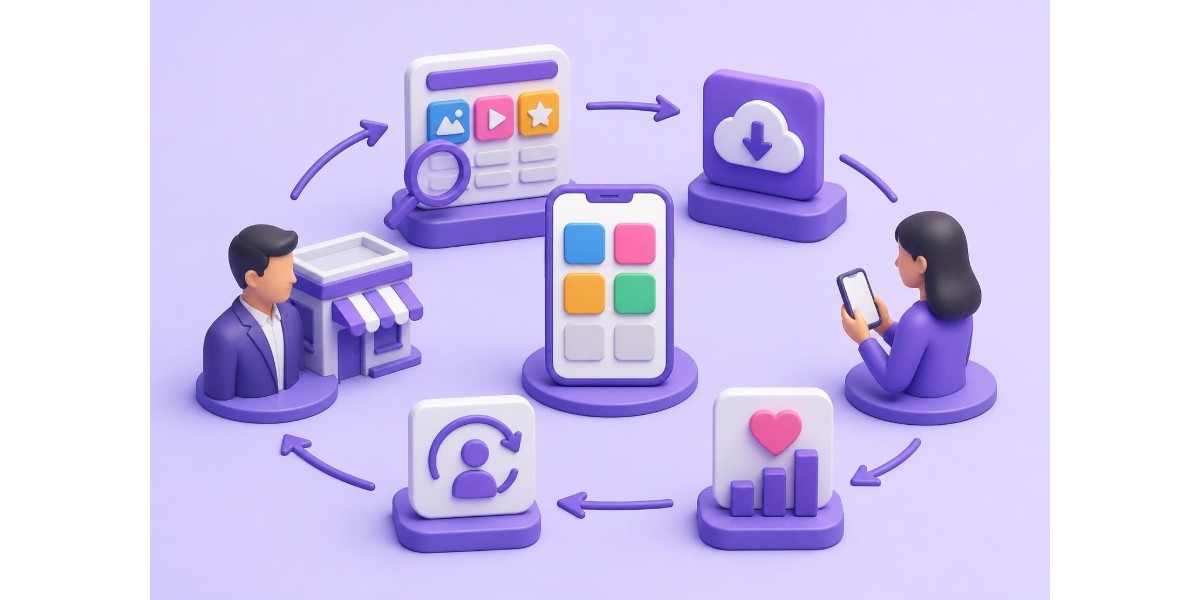
The app app market has evolved into a sophisticated ecosystem that shapes how businesses connect with customers, deliver services, and generate revenue. In 2026, understanding this dynamic marketplace is essential for any organisation seeking to leverage mobile technology for competitive advantage. From app stores to distribution channels, monetisation models to user acquisition strategies, the app app market presents both significant opportunities and complex challenges that demand strategic navigation.
Understanding the Current App App Market Landscape
The app app market has reached unprecedented scale and complexity. With consumer spending projected to exceed £160 billion across global app stores this year, the marketplace represents one of the most lucrative digital channels for businesses across all sectors.
Market Size and Growth Trajectories
Current data reveals remarkable momentum within the app app market:
- Global downloads: Exceeding 250 billion annual installations
- Active apps: Over 5 million applications available across major platforms
- User engagement: Average smartphone user interacts with 10-15 apps daily
- Revenue growth: Year-on-year increases of 18-22% in key categories
The electrical and compliance sectors have witnessed particular growth, with professional service applications gaining traction as businesses seek efficiency improvements. Digital platforms that streamline regulatory processes, such as those managing compliance documentation, have become increasingly vital.
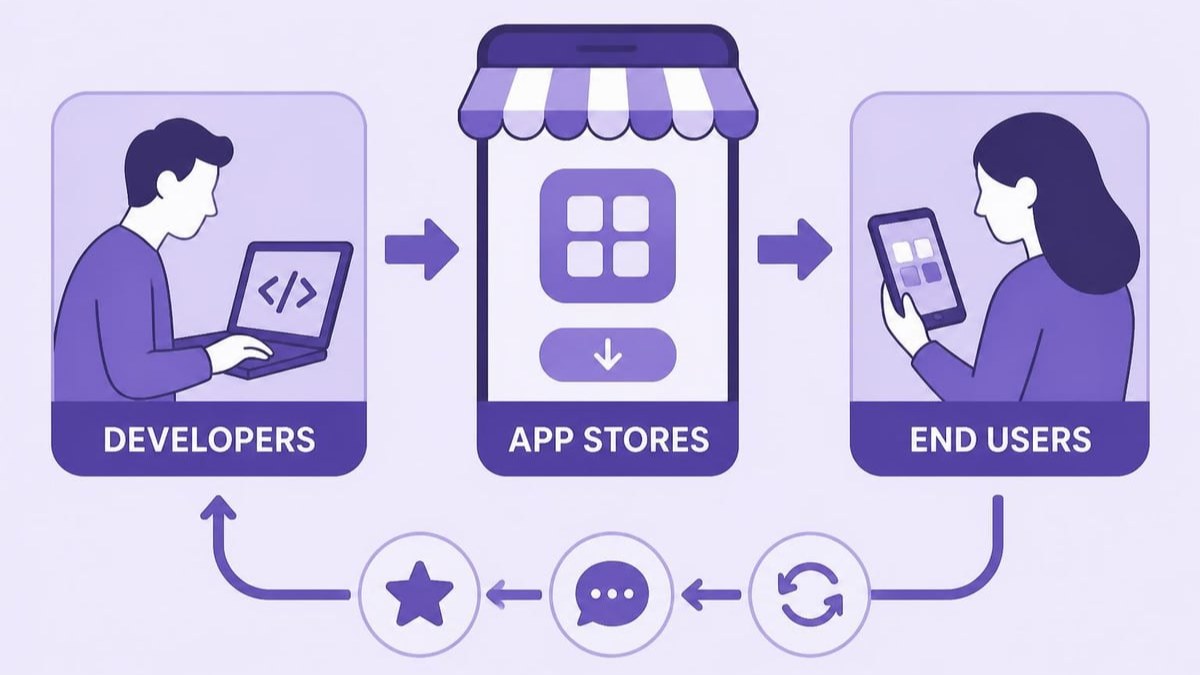
Dominant Categories and Emerging Segments
According to comprehensive analysis of global app downloads by category, certain segments demonstrate exceptional performance:
| Category | Market Share | Growth Rate | Key Characteristics |
|---|---|---|---|
| Gaming | 28% | +12% | High engagement, in-app purchases |
| Productivity | 15% | +24% | Business tools, collaboration |
| Finance | 12% | +19% | Payment solutions, compliance |
| Shopping | 11% | +16% | E-commerce integration |
| Education | 9% | +21% | Professional development |
Professional applications serving niche markets have carved out substantial positions within the app app market. Tools that address specific regulatory requirements or industry standards often achieve higher retention rates than general-purpose alternatives.
Monetisation Strategies Reshaping the App App Market
The mobile app market report examining monetisation and AI highlights significant shifts in revenue generation approaches. Businesses must understand these models to maximise their app app market potential.
Subscription Models Dominate Premium Offerings
Subscription-based monetisation has emerged as the preferred approach for professional and business applications. This model offers:
Predictable revenue streams that enable sustainable development and support. Companies can forecast income more accurately whilst providing continuous value through regular updates and feature enhancements.
Lower barrier to entry compared to high upfront costs. Users increasingly prefer manageable monthly fees over substantial one-time purchases, particularly for business tools that require ongoing maintenance.
Enhanced customer relationships through continuous engagement. Subscription models necessitate ongoing value delivery, which aligns provider incentives with user success.
For electricians and compliance professionals, subscription-based platforms offer particular advantages. Tools that simplify regulatory paperwork whilst ensuring accuracy justify recurring costs through measurable time savings and reduced error rates.
Freemium Strategies and Value Demonstration
The freemium approach allows users to experience core functionality before committing financially:
- Initial adoption through free tier access
- Value demonstration via practical use cases
- Upgrade incentives when users encounter limitations
- Premium conversion to unlock advanced features
This strategy proves especially effective in the app app market for business tools where decision-makers need confidence before investment. Providing genuine utility in free versions builds trust whilst showcasing premium capabilities.

Distribution Channels Within the App App Market
Multiple pathways exist for applications to reach their target audiences, each offering distinct advantages and constraints.
Traditional App Store Distribution
Apple's App Store and Google Play Store remain the primary gateways in the app app market. These platforms provide:
- Centralised discovery through categorisation and search functionality
- Trust signals via review systems and ratings
- Secure transactions with established payment processing
- Update mechanisms ensuring users receive latest versions
However, these benefits come with trade-offs. Platform fees typically claim 15-30% of revenue, whilst approval processes can delay launches and updates.
Alternative Distribution Methods
Progressive Web Apps (PWAs) and direct distribution channels have gained prominence:
Web-based deployment eliminates app store dependencies whilst maintaining cross-platform compatibility. Users access functionality through browsers, reducing installation friction and update complexity.
Enterprise distribution allows organisations to deploy applications directly to devices without public app store listing. This approach suits business tools requiring enhanced security or customisation.
For compliance-focused applications serving professional markets, cloud-based platforms offer particular advantages by synchronising across web and mobile interfaces seamlessly.
User Acquisition and Retention Dynamics
Success in the app app market depends equally on attracting users and maintaining engagement over time.
Discovery Mechanisms and App Store Optimisation
With millions of applications competing for attention, visibility determines success. Key factors include:
- Keyword optimisation in titles and descriptions
- Visual assets including icons, screenshots, and preview videos
- Rating maintenance through quality delivery and support
- Regular updates signalling active development
Google's implementation of AI-generated summaries in the Play Store represents an evolution in how users evaluate applications. These summaries distil review sentiment, helping potential users assess quality more efficiently.
Retention Through Continuous Value Delivery
The app app market has shifted focus from installation metrics to engagement and retention:
| Retention Metric | Industry Average | Top Performers | Improvement Strategy |
|---|---|---|---|
| Day 1 | 25% | 45% | Effective onboarding |
| Day 7 | 11% | 28% | Early value delivery |
| Day 30 | 6% | 18% | Feature discovery |
| Day 90 | 4% | 12% | Habit formation |
Professional applications serving specific workflows often achieve higher retention than consumer apps. When tools become integral to daily operations, users develop dependencies that sustain long-term engagement.
The Rise of Super Apps and Platform Consolidation
Understanding what super apps are and how they differ from traditional applications reveals important app app market trends. These comprehensive platforms combine multiple services within single interfaces.
Characteristics of Super App Ecosystems
Super apps demonstrate several defining features:
Service aggregation bringing diverse functionality under unified experiences. Users access messaging, payments, shopping, and services without switching applications.
Network effects where value increases with user base growth. More users attract more service providers, creating self-reinforcing cycles.
Reduced friction through consolidated authentication, payment methods, and user profiles. Single sign-on and stored preferences streamline interactions across services.
Whilst super apps dominate certain markets, specialised professional tools maintain distinct advantages. Applications addressing specific regulatory requirements or industry workflows offer depth that generalist platforms cannot match.
Quality Assurance and Market Dynamics
Maintaining app app market integrity requires robust quality controls and competitive analysis.
Pre-Market Quality Assessment
Research into detecting low-rating apps before market release demonstrates increasing sophistication in quality assurance. Platforms employ multiple mechanisms:
- Automated testing for functionality and security vulnerabilities
- Review processes evaluating compliance with guidelines
- Beta testing programmes gathering real-world feedback
- Rating prediction using machine learning models
These measures protect both users and platform reputations whilst maintaining app app market standards.
Competitive Intelligence Through Review Analysis
Studies exploring competition dynamics through user reviews reveal how sentiment analysis informs strategic decisions. Applications monitor competitor mentions, feature requests, and pain points expressed in reviews.
This intelligence guides development priorities, helping businesses differentiate offerings and address unmet needs within the app app market.
Platform-Specific Considerations and Fragmentation
Different operating systems and regional markets present unique challenges within the app app market landscape.
iOS Versus Android Development Trade-offs
Each platform offers distinct characteristics:
iOS development typically involves:
- Higher average revenue per user
- More uniform device ecosystem
- Stricter app review requirements
- Premium user demographics
Android development provides:
- Larger global market share
- Greater device fragmentation
- More flexible distribution options
- Diverse regional opportunities
Many businesses adopt cross-platform approaches, accepting additional complexity to maximise reach within the app app market.
Regional Market Variations
Comparative studies of Android app markets highlight significant regional differences. Markets in Asia, Europe, and Africa exhibit distinct preferences, regulatory environments, and competitive dynamics.
For businesses serving specific geographic regions, understanding local app app market characteristics proves essential. Compliance requirements, payment preferences, and user expectations vary considerably across territories.
Technology Trends Transforming the App App Market
Several technological advances are reshaping application capabilities and user expectations in 2026.
Artificial Intelligence Integration
AI functionality has moved from novelty to necessity across app categories:
- Personalisation engines adapting interfaces and content to individual preferences
- Predictive analytics anticipating user needs and streamlining workflows
- Natural language processing enabling voice commands and conversational interfaces
- Computer vision for document scanning, image recognition, and augmented reality
Professional applications leverage AI to reduce manual data entry and improve accuracy. For instance, applications enabling document signing increasingly incorporate intelligent capture and validation features.
Biometric Security Advancements
Biometric signature capabilities represent significant security enhancements within the app app market. Authentication methods now include:
- Fingerprint recognition for device-level security
- Facial recognition using advanced camera systems
- Biometric signatures ensuring document authenticity
- Multi-factor authentication combining multiple verification methods
These technologies prove particularly valuable for compliance applications where document integrity carries legal implications.

Business Applications and Professional Use Cases
The app app market extends far beyond consumer entertainment, with professional tools driving substantial value for businesses.
Industry-Specific Solutions
Vertical applications addressing particular industry needs achieve strong market positions through deep functionality. Characteristics of successful professional apps include:
Regulatory compliance built into core functionality. Applications designed for electricians, for example, must accommodate standards like SANS 10142-1 whilst simplifying complex documentation requirements.
Workflow integration that fits established processes rather than forcing adaptation. Tools that complement existing practices achieve higher adoption than those requiring significant behaviour change.
Offline capability ensuring functionality in environments with limited connectivity. Field professionals need applications that work reliably regardless of network availability.
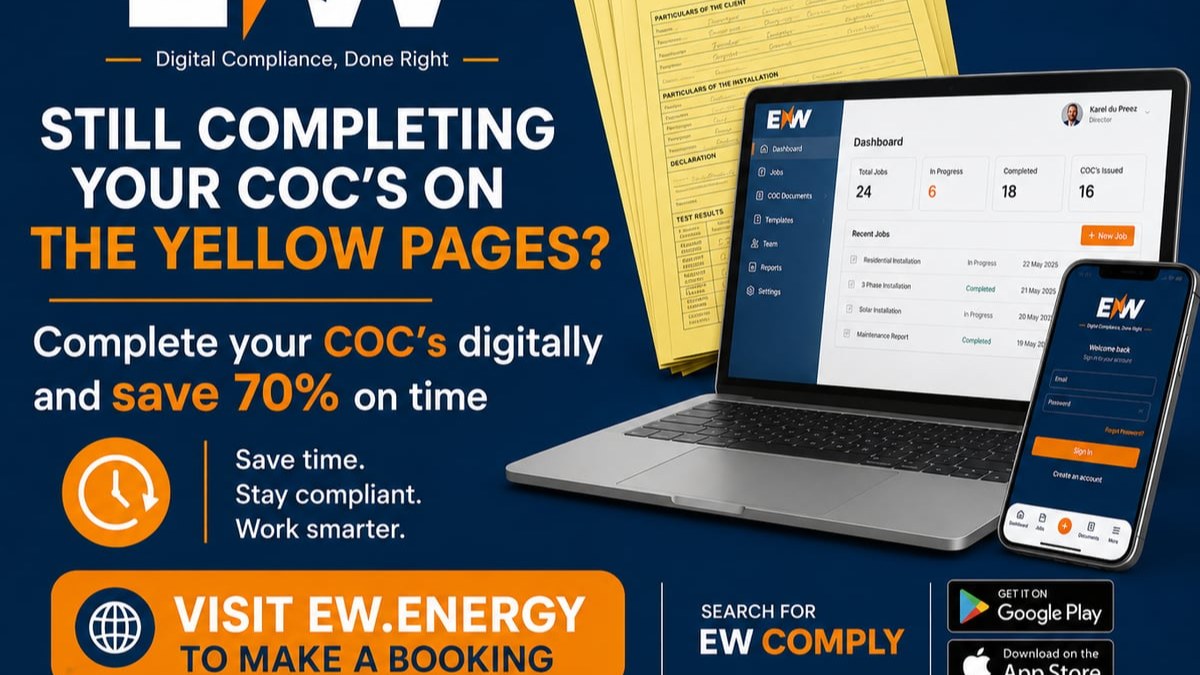
Energy Warehouse exemplifies this approach by providing a cloud-based platform that enables electricians to create and manage Certificates of Compliance up to 60% faster than manual methods, whilst maintaining full compliance with electrical standards.
Collaboration and Team Coordination
Modern professional applications emphasise team functionality:
- Real-time synchronisation across devices and users
- Role-based permissions controlling access to sensitive information
- Comment systems enabling contextual communication
- Document sharing with version control and audit trails
These features transform individual productivity tools into collaborative platforms that enhance entire team performance within the app app market ecosystem.
Development Approaches and Technical Considerations
Creating successful applications requires strategic technical decisions that impact functionality, cost, and time-to-market.
Native Versus Cross-Platform Development
Businesses face important architectural choices:
| Approach | Advantages | Disadvantages | Best For |
|---|---|---|---|
| Native iOS/Android | Optimal performance, full platform features | Separate codebases, higher cost | Premium experiences |
| Cross-platform frameworks | Code reuse, faster development | Performance compromises | Multi-platform launches |
| Progressive Web Apps | Universal access, no installation | Limited native features | Content-focused apps |
| Hybrid approaches | Balance of native and shared code | Increased complexity | Complex applications |
The optimal choice depends on target audience, feature requirements, and resource constraints within specific app app market segments.
Cloud Infrastructure and Scalability
Modern applications rely heavily on cloud services for:
Data storage and synchronisation enabling access across devices whilst maintaining consistency. Users expect seamless transitions between mobile and web interfaces.
Computational offloading performing complex processing server-side rather than on devices. This approach improves performance whilst reducing battery consumption.
Analytics and monitoring tracking usage patterns, identifying issues, and informing development priorities. Data-driven decision-making proves essential in competitive app app market conditions.
Marketing and User Acquisition Strategies
Even exceptional applications require effective promotion to achieve visibility within the crowded app app market.
Organic Growth Through App Store Optimisation
Optimising presence within app stores drives discovery without paid promotion:
- Researching keywords potential users actually search
- Crafting compelling descriptions that convert browsers to installers
- Creating visual assets that communicate value immediately
- Encouraging satisfied users to leave positive reviews
- Responding to feedback demonstrating active support
These efforts compound over time, building sustainable acquisition channels.
Paid User Acquisition Campaigns
Performance marketing complements organic strategies:
Search advertising targets users actively seeking solutions in specific categories. High intent translates to better conversion rates despite premium costs.
Display campaigns build awareness across websites and applications. Broader reach trades precision for volume in user acquisition.
Influencer partnerships leverage trusted voices to recommend applications. Authentic endorsements from industry experts prove particularly effective for professional tools.
Return on investment calculations must account for customer lifetime value, not merely installation costs, when evaluating paid channels within the app app market.
Data Privacy and Security Imperatives
Regulatory requirements and user expectations demand robust data protection measures across the app app market.
Compliance With Privacy Regulations
Applications must navigate complex regulatory landscapes:
- GDPR in European markets requiring explicit consent and data portability
- POPIA in South Africa governing personal information processing
- CCPA in California mandating consumer privacy rights
- Industry-specific standards for sectors like healthcare and finance
Organisations developing applications must implement privacy by design, incorporating data protection throughout development rather than as afterthoughts.
Security Best Practices
Protecting user data and maintaining trust requires comprehensive security approaches:
- Encryption for data at rest and in transit
- Secure authentication using modern protocols
- Regular security audits identifying vulnerabilities
- Incident response planning for potential breaches
- Transparent communication about data practices
For applications handling compliance documentation, security takes paramount importance. Digital platforms managing certificates must ensure document integrity whilst protecting sensitive information.
Analytics and Performance Measurement
Understanding application performance through data analysis drives continuous improvement within the app app market.
Key Performance Indicators
Successful applications track multiple metrics:
Acquisition metrics including downloads, installation sources, and cost per install provide insight into marketing effectiveness and discovery channels.
Engagement indicators such as daily active users, session length, and feature usage reveal how users interact with functionality and where they find value.
Retention measurements tracking user return patterns identify when and why users disengage, informing strategies to improve stickiness.
Revenue analytics monitoring conversion rates, average revenue per user, and customer lifetime value demonstrate financial performance and sustainability.
Iterative Improvement Cycles
Data-driven development follows continuous cycles:
- Hypothesis formation based on usage patterns and feedback
- Feature development addressing identified opportunities
- A/B testing comparing alternatives with statistical rigour
- Rollout strategies gradually deploying changes whilst monitoring impact
- Learning capture documenting insights for future decisions
This approach allows applications to evolve based on evidence rather than assumptions, increasing relevance within competitive app app market segments.
Future Directions and Emerging Opportunities
The app app market continues evolving rapidly, presenting new opportunities for innovative businesses.
Augmented Reality Integration
AR capabilities are expanding beyond gaming into practical applications:
- Visualisation tools showing electrical installations before implementation
- Training applications providing interactive instruction
- Inspection aids overlaying information onto physical environments
- Collaborative spaces enabling remote assistance
As hardware capabilities improve, AR functionality will become increasingly mainstream across professional app categories.
Internet of Things Connectivity
Applications increasingly serve as control centres for connected devices:
Sensor integration enabling real-time monitoring of electrical systems, equipment status, and environmental conditions.
Remote management allowing adjustments and troubleshooting without physical presence.
Automated workflows triggering actions based on predefined conditions or threshold violations.
These capabilities create new value propositions within the app app market, particularly for industrial and commercial applications.
Blockchain and Distributed Systems
Emerging technologies offer novel approaches to traditional challenges:
- Immutable records for compliance documentation and audit trails
- Smart contracts automating agreements and payment terms
- Decentralised storage reducing single points of failure
- Tokenisation creating new incentive mechanisms
Whilst mainstream adoption remains limited, these technologies may reshape aspects of the app app market in coming years.
The app app market in 2026 presents remarkable opportunities for businesses that understand its dynamics and user expectations. Success requires strategic planning across development, distribution, monetisation, and ongoing optimisation. Energy Warehouse demonstrates how specialised platforms can deliver substantial value by addressing specific industry needs with features like compliance automation, cloud synchronisation, and biometric security. Whether you're developing new applications or enhancing existing tools, Energy Warehouse offers insights into creating professional solutions that drive efficiency and ensure regulatory compliance in the electrical sector.