
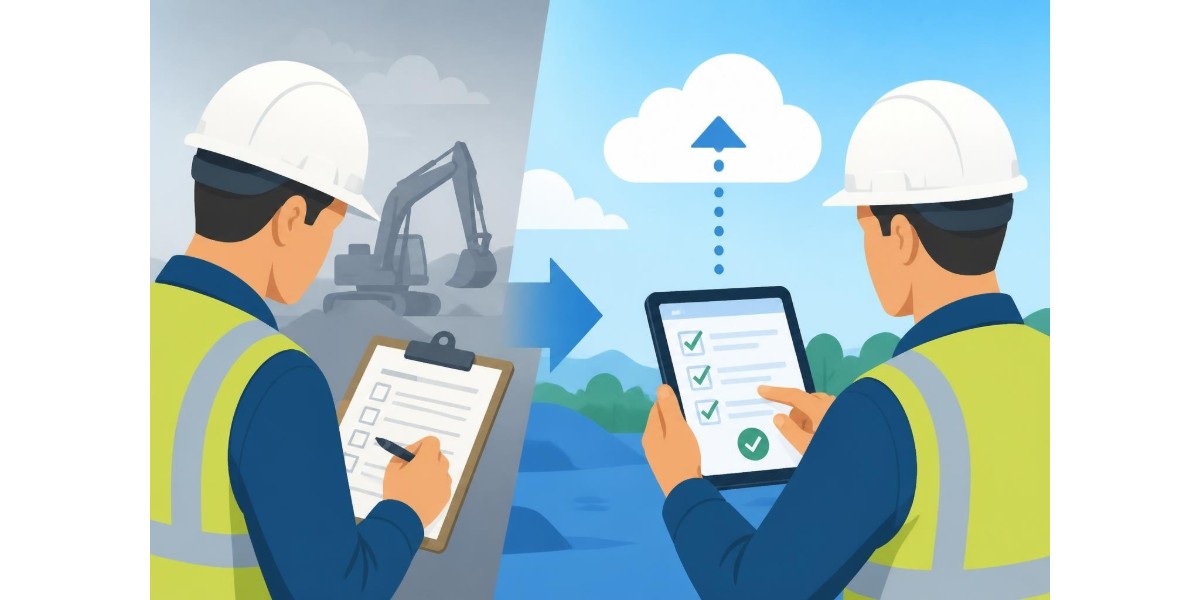
Digital transformation has fundamentally changed how professionals capture, manage, and share information in the field. A data collection app enables teams to gather structured data efficiently, eliminate paper-based workflows, and ensure compliance with regulatory standards. For electricians, compliance officers, and field service professionals, understanding how to select, implement, and optimise these tools has become essential to maintaining competitive advantage and operational excellence in 2026.
Understanding the Core Architecture of Data Collection Apps
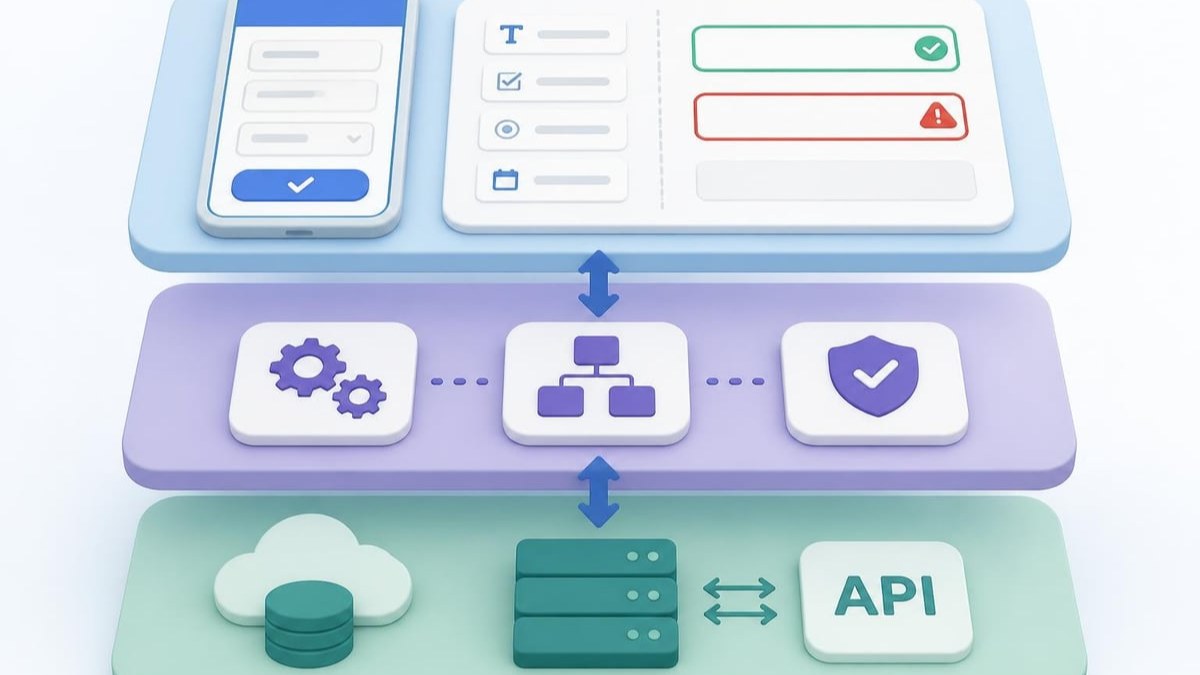
Modern data collection platforms operate on three fundamental layers: the user interface where data entry occurs, the middleware that validates and processes information, and the backend infrastructure that stores and distributes completed records. Each layer plays a critical role in determining overall system performance and reliability.
The user interface must balance comprehensiveness with simplicity. Forms designed for mobile devices require careful consideration of screen size, input methods, and offline functionality. Voice-to-text capabilities have emerged as a standard feature, allowing field workers to capture observations whilst keeping hands free for equipment operation.
Middleware validation prevents errors at the point of entry rather than during post-submission review. Real-time field checks verify that entered data meets format requirements, falls within acceptable ranges, and satisfies logical dependencies between form fields.
Offline Functionality and Data Synchronisation
Network connectivity remains unreliable in many work environments, making offline capability a non-negotiable requirement for any serious data collection app. The application must store incomplete and completed forms locally, then synchronise automatically when connectivity returns.
Conflict resolution becomes critical when multiple team members work on related records whilst offline. Robust synchronisation protocols prevent data loss and maintain referential integrity across distributed teams. The official ODK documentation provides comprehensive technical guidance on implementing offline workflows that preserve data accuracy during intermittent connectivity.
Effective offline mode requires:
- Local database replication with full form functionality
- Intelligent queueing of pending submissions
- Automatic retry logic with exponential backoff
- Clear visual indicators showing synchronisation status
- Conflict detection and resolution workflows
Security Standards and Compliance Requirements
Data protection has evolved from an optional enhancement to a regulatory requirement across virtually every industry. A data collection app handling sensitive information must implement multiple security layers to protect against unauthorised access, data breaches, and compliance violations.
Authentication and Access Control
Biometric authentication provides stronger security than traditional password systems whilst improving user experience. Fingerprint scanning, facial recognition, and voice authentication prevent unauthorised access even when devices are lost or stolen. These methods also create audit trails documenting who accessed specific records and when.
Role-based access control ensures team members see only the information relevant to their responsibilities. An apprentice electrician might complete inspection forms without viewing historical compliance records, whilst a project manager accesses full audit capabilities across all team activities.
The NIST guidance on vetting mobile application security establishes frameworks for evaluating authentication strength, encryption standards, and data protection mechanisms before deploying apps in production environments.
Data Encryption and Transmission Security
All data collection app implementations must encrypt information both at rest and in transit. AES-256 encryption has become the baseline standard for stored records, whilst TLS 1.3 protocols secure transmission between mobile devices and cloud infrastructure.
| Security Layer | Standard Implementation | Purpose |
|---|---|---|
| Device storage | AES-256 encryption | Protect locally cached data |
| Network transmission | TLS 1.3 with certificate pinning | Prevent interception and tampering |
| Backend storage | Encrypted databases with key rotation | Secure archived records |
| Biometric data | Secure enclave processing | Protect authentication credentials |
Implementing secure mobile device environments requires comprehensive policies addressing device management, app distribution, and data lifecycle controls. The NIST cybersecurity practice guide on mobile device security offers detailed technical controls for organisations deploying data collection apps across bring-your-own-device and corporate-owned device scenarios.
Essential Features for Professional Data Collection
The gap between basic and professional-grade data collection app platforms centres on features that streamline complex workflows, ensure data quality, and integrate with existing business systems.
Form Design and Logic Implementation
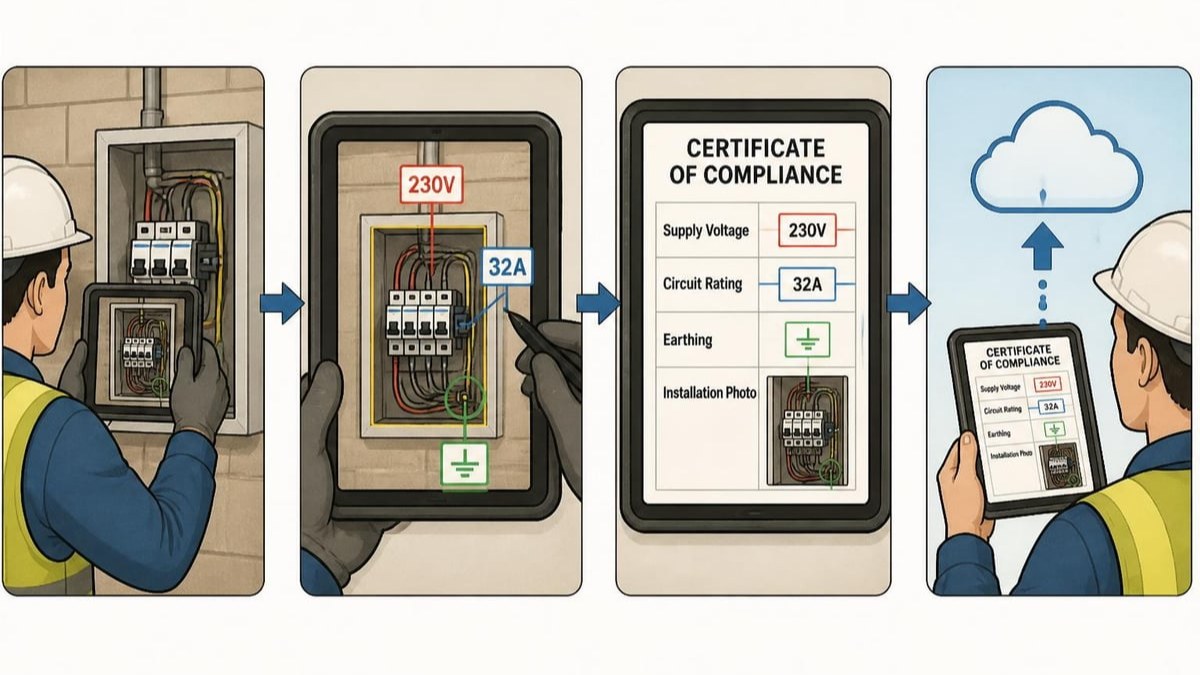
Conditional logic transforms static questionnaires into intelligent data collection instruments. Skip patterns direct respondents past irrelevant sections based on previous answers, whilst dynamic calculations compute derived values automatically. For electricians completing Certificates of Compliance, this means voltage calculations, load assessments, and compliance determinations happen automatically as measurements are entered.
Repeating groups allow collection of variable-length lists within a single form submission. An electrical installation might require documentation of multiple distribution boards, each with varying numbers of circuits. Properly designed repeating groups capture this hierarchical data structure without creating separate forms for each scenario.
The WHO SMART Trust ethical principles emphasise that form design should minimise respondent burden whilst ensuring informed consent and transparent data use, particularly relevant when collecting personal or sensitive information.
Media Capture and Attachment Management
Modern compliance workflows increasingly require photographic evidence, video documentation, and supporting attachments linked to structured data records. A comprehensive data collection app integrates camera functionality directly into forms, automatically associating captured images with specific form fields.
Annotation tools enable field workers to mark up photographs with arrows, measurements, and text labels that clarify observations for reviewers. Automatic timestamping and GPS tagging provide verifiable evidence of when and where documentation occurred.
Cloud synchronisation of media files requires careful bandwidth management. Progressive upload strategies prioritise form data submission over large image files, ensuring critical structured information reaches backend systems even on limited connections.
Implementation Strategies for Field Teams
Successful deployment of a data collection app depends less on technology selection and more on change management, training design, and iterative refinement based on user feedback.
Pilot Testing and User Acceptance
Begin with limited deployment amongst experienced team members who can provide detailed feedback on form design, workflow integration, and technical issues. Pilot groups should represent the full range of scenarios the application will encounter in production use.
Structured feedback collection during pilot phases identifies usability problems, missing features, and training gaps before organisation-wide rollout. Simple surveys after each completed job reveal friction points that might not surface during formal testing sessions.
Iteration cycles should progress rapidly during initial deployment:
- Deploy pilot version to 5-10% of field staff
- Collect structured feedback over two-week period
- Prioritise and implement critical improvements
- Expand deployment to 25-30% of team
- Monitor adoption metrics and support requests
- Refine training materials and workflow documentation
- Execute full deployment with ongoing support
Training Programmes and Support Resources
Effective training combines hands-on practice with real-world scenarios rather than abstract demonstrations. Field workers should complete sample forms using equipment and workflows identical to daily operations before deploying the data collection app on actual jobs.
Microlearning modules delivered through short video tutorials prove more effective than lengthy training sessions. Five-minute segments covering specific features allow team members to review relevant functionality immediately before using it in the field.
Establishing clear support channels prevents productivity loss when users encounter problems. Designated super-users within each team provide first-line assistance, escalating complex issues to technical support when necessary. The team collaboration features enable real-time communication between field staff and support personnel, with screen sharing and annotation capabilities that accelerate problem resolution.
Data Quality and Validation Protocols
The value of collected information depends entirely on accuracy, completeness, and consistency. Automated validation catches most errors, but comprehensive quality assurance requires multiple complementary strategies.
Real-Time Validation Rules
Field-level validation prevents impossible values, format errors, and missing required information. Numeric fields enforce minimum and maximum bounds, text fields validate against expected patterns, and date fields prevent entries in the future or distant past.
Cross-field validation ensures logical consistency between related data points. An electrical installation's total load cannot exceed the sum of individual circuit loads. Installation dates must precede test dates. Measured voltages should fall within expected ranges for the declared supply type.
Complex validation rules benefit from clear error messaging that explains what went wrong and how to correct it. "Voltage reading of 415V conflicts with single-phase supply selection" provides actionable guidance, whilst "Invalid voltage" leaves users guessing at the problem.
Longitudinal Data Collection and Quality Control
Projects spanning weeks or months require consistency across multiple data collection sessions. Template-based forms pre-populate common fields from previous submissions, reducing data entry burden whilst maintaining standardisation.
Regular quality audits comparing field submissions against physical documentation identify systematic errors, misunderstood procedures, and training gaps. Random sampling of 10-15% of submissions provides statistical confidence in overall data quality whilst maintaining reasonable review burden.
The scoping review of mobile health data collection documents challenges and best practices for maintaining data quality across extended longitudinal collection periods, with particular attention to participant retention and measurement consistency.
Integration with Business Systems and Workflows
A data collection app delivers maximum value when it becomes part of a seamless digital ecosystem rather than an isolated tool requiring manual data transfer to other systems.
API Connectivity and Data Export
Modern platforms expose RESTful APIs that enable bidirectional data exchange with enterprise resource planning systems, customer relationship management platforms, and specialised compliance databases. Automated data flows eliminate transcription errors and reduce administrative overhead.
Flexible export formats accommodate different downstream requirements. Structured CSV files enable import into spreadsheet analysis tools, whilst JSON exports preserve complex hierarchical data structures for integration with custom applications.
Real-time webhooks notify external systems immediately upon form submission, triggering automated workflows such as client notifications, task assignments, and compliance verification processes.
| Integration Type | Technical Approach | Common Use Cases |
|---|---|---|
| Scheduled export | Automated daily/hourly data dumps | Analytics, reporting, archival |
| API pull | External systems retrieve data on demand | Dashboard updates, audit queries |
| Webhook push | Real-time notifications on submission | Workflow automation, alerts |
| Direct database | Shared data warehouse with synchronisation | Enterprise reporting, BI tools |
Document Generation and Digital Signatures
Professional services increasingly require formal documentation derived from collected data. A sophisticated data collection app generates PDF certificates, reports, and compliance documents automatically from form submissions, applying organisation branding and formatting standards consistently.
Digital signature capabilities transform static documents into legally binding agreements. Biometric signatures captured on mobile devices provide stronger authentication than traditional wet signatures, with cryptographic seals preventing post-signature modification.
Energy Warehouse demonstrates this integration by enabling electricians to capture installation data through structured forms, automatically generate SANS 10142-1 compliant Certificates of Compliance, and secure them with biometric signatures-all within a single platform. This eliminates the traditional workflow requiring separate tools for data collection, document creation, and signature capture.
Remote Data Collection Methodologies
The shift toward distributed work arrangements has accelerated adoption of remote data collection strategies that maintain data quality whilst accommodating geographic dispersion and access constraints.
Mobile Survey Implementation
Phone-based surveys and self-administered mobile questionnaires extend data collection reach beyond the limitations of in-person visits. Careful questionnaire design becomes even more critical when respondents complete forms without immediate access to trained assistance.
The World Bank guidance on phone survey methods provides comprehensive frameworks for sampling design, questionnaire adaptation, and quality control specific to remote data collection contexts.
Computer-assisted telephone interviewing (CATI) systems integrate with data collection app platforms, enabling call centre operators to enter responses directly into validated forms whilst maintaining conversational flow with respondents.
Privacy and Ethical Considerations
Remote collection of personal information raises heightened privacy concerns. Informed consent processes must clearly explain data use, storage duration, and access controls in language appropriate to respondent education levels and cultural contexts.
The Access Now humanitarian technology mapping outlines best practices for selecting and governing data collection tools in sensitive contexts where privacy breaches could endanger vulnerable populations. These principles apply broadly to any data collection app handling personal information.
Anonymisation techniques protect respondent identity whilst preserving analytical utility. Pseudonymisation replaces identifying information with coded references, allowing longitudinal tracking without exposing personal details to analysts.
Advanced Analytics and Biometric Integration
Leading-edge implementations combine traditional structured data collection with biometric authentication and automated analytical pipelines that extract actionable insights from field submissions in real time.
Biometric Subject Identification
Projects requiring accurate longitudinal tracking benefit from biometric linkage that reliably connects multiple data collection events to specific individuals without relying on easily confused name-based matching. The biometric integration framework describes open-source architectures that combine fingerprint capture with standard data collection app platforms whilst maintaining privacy protections.
Deduplication algorithms using biometric data prevent accidental duplicate records that compromise data quality and analytical accuracy. Template matching occurs locally on devices rather than transmitting biometric data to cloud servers, addressing privacy concerns inherent in centralised biometric databases.
Automated Quality Metrics and Dashboards
Real-time monitoring dashboards aggregate submission statistics, flag outliers, and identify systematic errors as they emerge. Project managers gain immediate visibility into team productivity, data quality trends, and workflow bottlenecks without manually reviewing individual submissions.
Machine learning models trained on historical data detect unusual patterns that merit manual review. Sudden changes in measurement distributions, unexpectedly long completion times, or GPS coordinates inconsistent with project locations trigger automatic alerts.
Performance metrics tracked continuously include:
- Submissions per field worker per day
- Average completion time by form type
- Validation error rates by field and operator
- Offline usage patterns and synchronisation delays
- Media file sizes and upload success rates
- Geographic distribution of collection activities
Selecting the Right Platform for Your Organisation
The data collection app market offers solutions ranging from generic form builders to specialised compliance platforms. Systematic evaluation against organisational requirements ensures selection of tools that deliver long-term value rather than quick deployment followed by costly replacement.
Technical Evaluation Criteria
Platform selection should prioritise demonstrated reliability under real-world field conditions. Battery consumption significantly impacts usability on full-day assignments. Apps that aggressively synchronise in the background or maintain unnecessary active connections drain device power rapidly.
Vendor lock-in risk requires careful consideration. Platforms offering standard export formats and documented APIs enable future migration if requirements change or vendor support deteriorates. Proprietary data formats that restrict extraction create long-term vulnerability.
| Evaluation Factor | Critical Questions | Risk Level |
|---|---|---|
| Data portability | Can you export all historical data in standard formats? | High |
| Offline capability | How long can users work without connectivity? | High |
| Security certifications | Does vendor maintain ISO 27001, SOC 2 compliance? | High |
| Customisation limits | Can forms implement your specific business logic? | Medium |
| Support availability | What timezone coverage and response times? | Medium |
| Pricing model | Are costs predictable as usage scales? | Medium |
The systematic review of mobile network data applications examines methodological and privacy considerations relevant to evaluating data collection platforms, particularly regarding metadata collection and analytical capabilities.
Total Cost of Ownership
Subscription fees represent only one component of platform costs. Implementation requires staff time for configuration, form design, testing, and training. Ongoing maintenance includes form updates, user support, and periodic retraining as features evolve.
Hidden costs often surface after deployment. API access restrictions that require premium subscriptions, per-submission charges that escalate with usage, and storage limits requiring paid upgrades all impact budget predictability.
Calculate realistic total cost by projecting:
- Initial setup and configuration (internal staff time and external consultancy)
- Subscription or licence fees across anticipated user count
- Training development and delivery for initial and ongoing users
- Technical support and help desk operation
- System administration and maintenance overhead
- Integration development and API usage fees
- Future migration costs if platform changes become necessary
Regulatory Compliance and Data Governance
Organisations operating across multiple jurisdictions face complex compliance landscapes requiring careful attention to data residency, processing limitations, and individual rights frameworks.
GDPR, POPIA, and Regional Requirements
The General Data Protection Regulation and South Africa's Protection of Personal Information Act establish baseline requirements for personal data processing, whilst sector-specific regulations impose additional constraints. Electrical contractors must ensure their data collection app implementations satisfy POPIA requirements regarding consent, purpose limitation, and data subject rights.
Data minimisation principles require collecting only information directly necessary for stated purposes. Forms requesting extensive personal details without clear operational justification create unnecessary compliance risk and erode trust with clients and team members.
Geographic restrictions on data storage and processing complicate cloud-based platform selection. Organisations serving European clients may require data processing within EU borders, whilst South African operations must consider local data residency preferences.
Audit Trails and Compliance Documentation
Comprehensive audit logging documents all data access, modifications, and deletions throughout the record lifecycle. Immutable logs stored separately from primary data prevent tampering whilst satisfying regulatory requirements for accountability and transparency.
Version control for forms ensures that changes to data collection instruments are documented with timestamps, responsible parties, and justification notes. Compliance audits frequently require demonstrating exactly what questions were asked at specific points in time.
Retention policies balance regulatory requirements to maintain records against privacy principles favouring data minimisation. Automated purging of expired records reduces storage costs and compliance risk simultaneously.
Modern field operations demand digital tools that capture accurate data efficiently whilst maintaining security, compliance, and quality standards. The transition from paper-based processes to sophisticated data collection app platforms represents more than simple digitisation-it fundamentally transforms workflow design, quality assurance, and organisational capability. For electricians and compliance professionals managing complex regulatory requirements, selecting and implementing the right platform determines competitive advantage in an increasingly digital marketplace. Energy Warehouse provides electrical professionals with a purpose-built platform that combines efficient data capture, automated compliance checking, biometric security, and seamless document generation to complete Certificates of Compliance up to 60% faster than traditional methods.